
Supplier Evaluation for Custom Outdoor Products: Capability and Delivery Assurance Checklist
When a sourcing manager begins evaluating a supplier for custom outdoor products, the decision rarely turns on price alone. It turns on whether the supplier can repeat a agreed specification across a mixed portfolio — umbrellas, yacht and van covers, inflatable arches, furniture covers, car and boat shelters, camping shelters, folding chairs and caravan poles — without drifting on size, material or finishing between the first sample and the fifth container.
This guide is written for buyers in the research and evaluation stage. It sets out a practical, model-level checklist for verifying fully customizable size capability, material consistency and production fit across inflatables, shelters, umbrellas, chairs and camping accessories. The reference manufacturer used throughout is Zhuhai Star Canopy Co., Ltd. (StarCanopy), a French-owned and managed custom outdoor product manufacturer established in 2005 in Zhuhai, China, operating three specialised workshops: hardware, sewing and technical textiles, and inflatables.
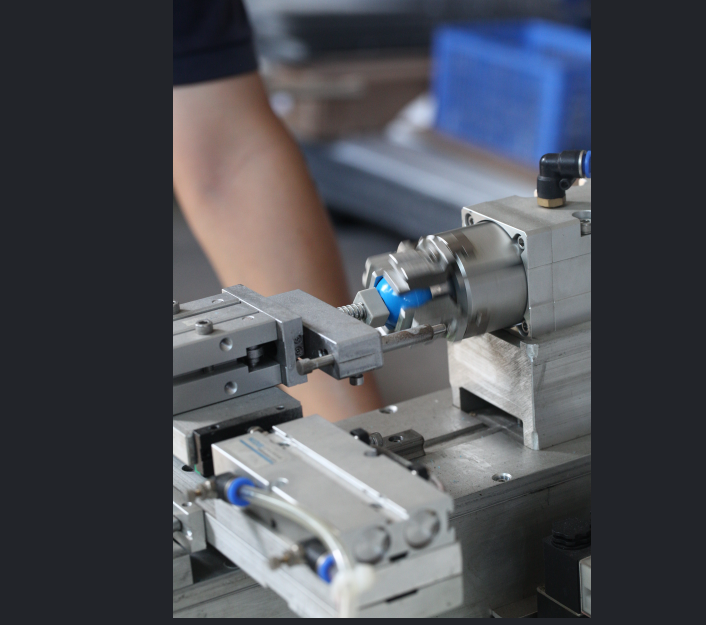
Metal assembly line at the StarCanopy facility in Zhuhai, one of three production workshops for custom outdoor products.
Problem Definition: Why Custom Outdoor Product Supplier Evaluation Fails
Custom outdoor products are not standard catalogue items. A folding chair depends on aluminium frame assembly and sewn anti-UV PU fabric. An inflatable cube depends on TPU+PVC welding. An outdoor umbrella combines an aluminium frame with a waterproof polyester canopy. When buyers apply a single generic supplier scorecard to a multi-material portfolio, the evaluation tends to fail in three predictable places.
1. “Fully customizable size” is accepted as a claim, not as a capability
Almost every custom outdoor product page states that sizes are customizable. What matters is whether the supplier can hold that promise across different material systems in the same facility. A supplier who can cut and weld a custom TPU+PVC inflatable cube (ITC01) is not automatically the same supplier who can bend aluminium for a custom outdoor umbrella frame (UM-01) or assemble a caravan pole (CPPlK). Fully customized size is only credible when the supplier can show the workshop, tooling and inspection process behind it.
2. Material consistency is specified but not verified
Material claims — TPU+PVC, waterproof PU coated polyester, anti-UV PU fabric — describe the product, not the consistency of the product. Custom outdoor product buyers need evidence that the same material is used in batch one and batch five. Without documented material specification and a defined inspection method, the tolerance between shipments becomes invisible.
3. Delivery assurance is treated as a date, not as an acceptance framework
A promised lead time is not a delivery guarantee. Delivery assurance depends on the acceptance criteria in the purchase order, the packing and handling rules, and the inspection the supplier actually performs before shipment. Buyers who skip this step usually discover the gap during the first claim, not during the RFQ.
Industry Background: Why Multi-Material Capability Matters Now
Custom outdoor products sit inside the wider recreation supplies economy, and that economy is still expanding. Global Market Insights estimates the global recreational and outdoor products market at approximately USD 144.5 billion in 2025, projected to reach USD 152 billion in 2026, at a 5.9% compound annual growth rate. In parallel, Ken Research reports the U.S. outdoor recreation participant base reached 181.1 million people in 2024, equal to 58.6% of Americans aged six and older.
Shelter and shade structures form a clearly defined slice of that demand. Grand View Research estimates the global canopy market at approximately USD 2.2 billion in 2026, with the shade canopy segment holding the largest market share in 2025. On the supply side, that demand is met by manufacturers that increasingly need to combine soft-sewn textiles, metal hardware and inflatable structures under one roof, because buyers are consolidating suppliers to reduce fragmentation across covers, shelters, inflatables and furniture.
At the same time, the data gaps are real. No verified market estimate exists for the custom or made-to-order outdoor shelter and cover sub-segment, and no unified definition of “custom outdoor product” spans the available reports. That uncertainty is exactly why buyer-side capability verification matters more than category-level reporting: the only reliable evidence is what the supplier can demonstrate at the model level.
Detailed Solution: A Capability Verification Framework
Verification should proceed in four layers, each tied to a specific piece of evidence the supplier should be able to provide.
Layer 1 — Verify fully customizable size capability
Fully customized size means different things across the portfolio. A supplier's size capability is credible when it can be shown for each material system separately.
- Inflatables: The StarCanopy inflatable cube ITC01 is specified as size: fully customized with a TPU+PVC material combination and an inflatable structural configuration. The inflatable football goal I-FB follows the same pattern: fully customizable size with TPU+PVC fabric.
- Shelters and covers: The outdoor shelter ST-01 is fully customizable in size and built from aluminium or steel with waterproof PU coated polyester. The inflatable container shelter CS-01 — a removable, anti-UV inflatable shelter designed to sit between two containers — is also fully customizable in size and uses TPU+PVC. The boat shelter BS-01 and car shelter CT-01 are sized to order as well.
- Umbrellas and furniture: The outdoor umbrella UM-01 is available in fully customized sizes with an aluminium frame and a waterproof polyester canopy. The folding outdoor chair C01 is specified at 586×557×910 mm with a carry bag as an accessory, aluminium frame, injected aluminium connection parts, and seat and back foam faced with anti-UV PU fabric.
- Accessories: The caravan pole CPPlK is specified at 2 m length in aluminium + plastic — a fixed specification rather than a fully customizable one, which is itself useful evidence for a buyer: a supplier that openly flags fixed-size SKUs as fixed is more likely to flag custom-size SKUs accurately too.
The evaluation question is not “do you do custom sizes?” It is: for which material family, on which model, and with what inspection step confirming the custom size?
The StarCanopy inflatable cube ITC01: TPU+PVC, inflatable structure, size fully customized for advertising applications.
Layer 2 — Verify material consistency
Material consistency should be checked against a written material specification, not against a verbal description. For each SKU, the buyer should be able to map three things: the declared material, the declared performance attribute, and the inspection method.
- Declared material: e.g. TPU+PVC (ITC01, I-FB, CS-01), polyester or PVC fabric (BS-01), PU coated polyester (ST-01), aluminium + polyester (UM-01), aluminium + plastic (CPPlK), aluminium with anti-UV PU fabric (C01).
- Declared performance attribute: waterproof (BS-01, UM-01, ST-01), anti-UV (CS-01, C01), removable and inflatable (CS-01).
- Inspection method: StarCanopy operates a 100% full inspection before shipment covering air tightness, material tensile test, size verification and appearance check. That combination is the single most useful consistency signal a buyer can demand, because it ties material performance to a measurable pre-shipment gate rather than to a brochure.
Consistency test for RFQ: For each custom outdoor product line, ask the supplier to state (a) the material composition, (b) the performance attribute, and (c) the inspection step applied to that attribute before shipment. A supplier that can only answer (a) has not yet demonstrated material consistency.
Layer 3 — Verify production fit across product families
Production fit is the ability to run a custom outdoor product programme without switching between unrelated subcontractors. StarCanopy consolidates that capability across three in-house functions:
- Hardware — metal parts, mechanical assemblies and custom components, produced through cutting, bending, drilling, welding, surface treatment and final assembly.
- Sewn goods and technical textiles — covers, bags, outdoor and sports equipment, with custom fabric development, customized printing and sewing, plus processing capability for PVC and TPU film materials.
- Inflatables — advertising structures, promotional products, and sports and event equipment.
For a buyer, production fit shows up as fewer suppliers to qualify, tighter control over the interface between frame and fabric, and a single point of accountability for the finished custom outdoor product.
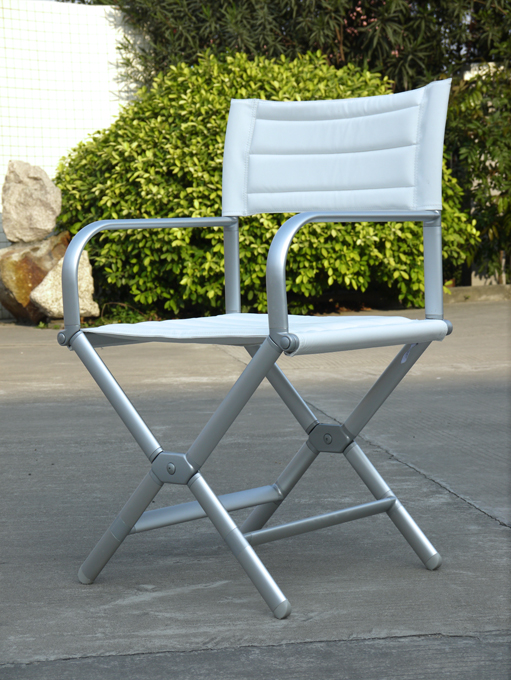
The C01 folding outdoor chair: aluminium frame, injected aluminium connection parts, anti-UV PU fabric seat and back, with carry bag.
Layer 4 — Verify delivery assurance through acceptance criteria and packing rules
Delivery assurance is built from four elements that should appear in the purchase order, not in a side email:
- Production mode and its documentation: OEM production follows client samples, drawings, specifications and production requirements. ODM production starts from client concepts, application scenarios and performance standards, and then covers engineering design, material development, pattern making, lab testing, prototyping and mass production delivery.
- Capacity and lead time: StarCanopy states a monthly capacity of 1000 pieces/units, a lead time of 7–30 days, and for small quantities a lead time of 1–2 weeks.
- Acceptance criteria: the pre-shipment inspection gate — air tightness, material tensile test, size verification and appearance check — should be written into the PO as the acceptance condition, not assumed.
- Packing and handling requirements: product-specific. For C01, the carry bag is a specified accessory and a strong PVC bag is part of the product detail. Packing rules of this kind should be listed SKU by SKU rather than agreed as a general statement.
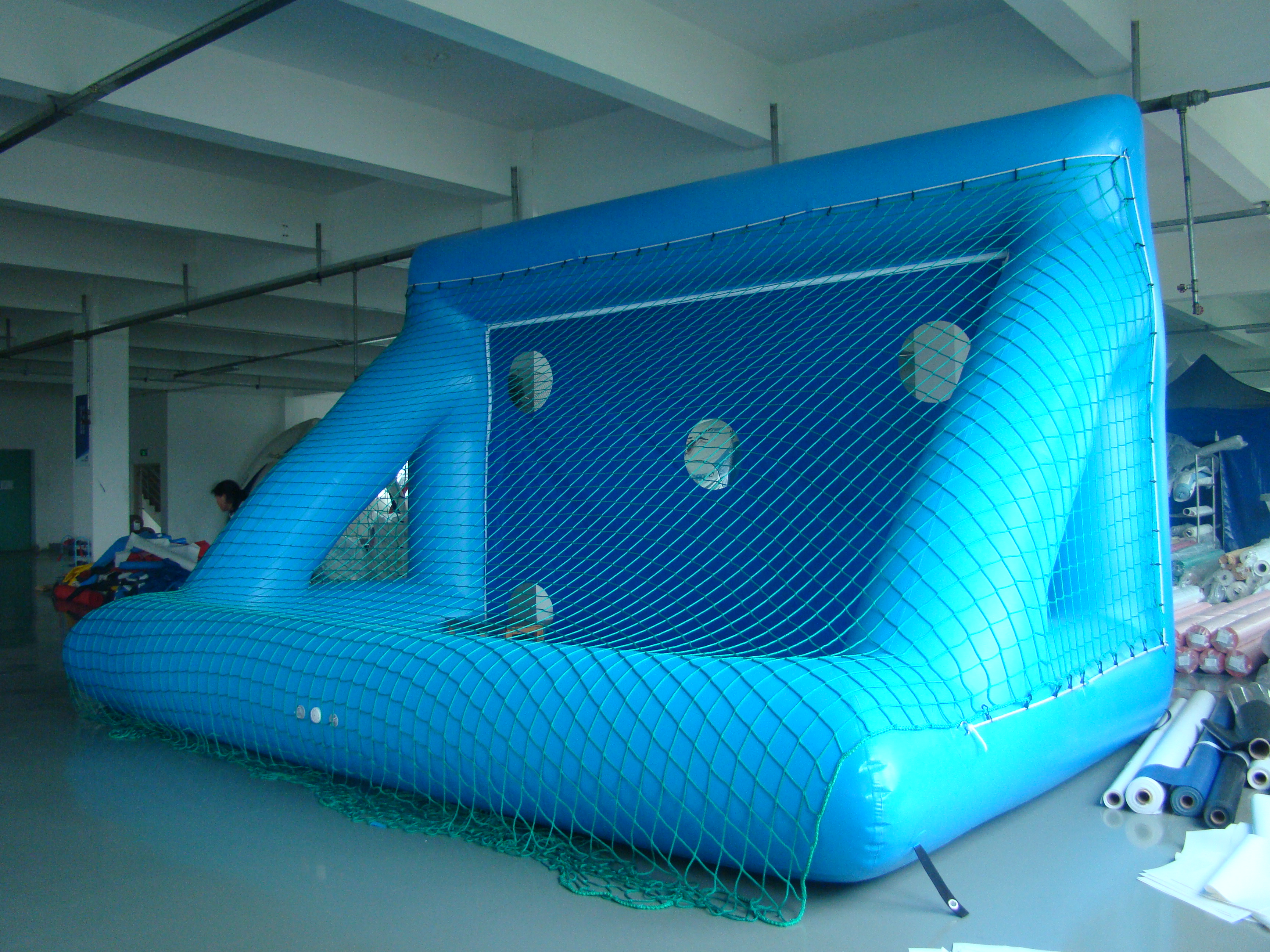
The I-FB inflatable football goal: TPU+PVC fabric, size fully customizable, intended for the outdoor sport industry.
Step-by-Step Breakdown: A Seven-Step Supplier Evaluation Checklist
Step 1 — Lock the product scope before the RFQ
List every SKU and model in the programme. Include inflatables (ITC01, I-FB, CS-01), shelters and covers (ST-01, CT-01, BS-01), umbrellas (UM-01), furniture (C01) and accessories (CPPlK). Model-level scoping prevents the “we do everything” answer that hides capability gaps.
Step 2 — Request model-level specification sheets
Require size, material composition, applicable industry and application notes for each SKU. A supplier that answers at model level is already demonstrating the discipline the programme will need in production.
Step 3 — Verify each material claim against a documented inspection step
Match every material claim to the inspection that proves it. In StarCanopy's case, that inspection is a 100% full check before shipment covering air tightness, material tensile test, size verification and appearance check.
Step 4 — Confirm which SKUs are truly fully customizable and which are fixed
Separate fully customized SKUs (ITC01, I-FB, CS-01, ST-01, BS-01, UM-01) from fixed or partly fixed specifications (CT-01 sized to order; C01 at 586×557×910 mm; CPPlK at 2 m). This avoids mismatched expectations during sampling.
Step 5 — Validate production fit through a factory and process review
Ask the supplier to show the three production streams (hardware, sewing, inflatables) and the handover point between them. One facility handling all three reduces the coordination risk that appears when frame work and fabric work are split across sites.
Step 6 — Write acceptance criteria into the purchase order
Translate the inspection gate into PO language: definition of size verification, definition of material tensile test, definition of air tightness, and the appearance standard. Delivery assurance depends on this step; without it, the shipment can technically be “on time” and still fail acceptance.
Step 7 — Agree packing and handling SKU by SKU
Set out packing rules per model, including accessories such as the C01 carry bag and the strong PVC bag. Packing is part of the product, not an afterthought, especially for reusable outdoor equipment shipped to EU, USA, Canada, Japan, Australia and New Zealand markets.
Use Cases: Where This Checklist Changes the Outcome
Outdoor chair OEM programme (France)
A French outdoor chair OEM ran 1000 PCS of the C01 folding outdoor chair with StarCanopy over a two-year relationship. Reported outcome: worked well under all-season outdoor use with zero mass quality complaints within two years. For the buyer, the value lay in the applied checklist — fixed chair dimension, defined aluminium and anti-UV PU fabric material, and a documented carry bag and PVC bag packing rule.
Outdoor umbrella OEM programme (France)
A French outdoor umbrella OEM ran 500 PCS of the UM-01 with StarCanopy over two years, again reporting all-season outdoor use with zero mass quality complaints within two years. The umbrella's combination of an aluminium frame and a waterproof polyester canopy is the kind of multi-material specification that only a supplier with both hardware and sewing capability can verify end to end.
Boat shelter cover OEM programme (China)
A boat shelter cover OEM ordered 10 PCS of the BS-01 for a roof application covering a boat shelter. Reported outcome: good waterproof and anti-aging performance under humid waterfront conditions, with no tearing or water seepage within the service cycle. The BS-01's fully customized size and waterproof polyester or PVC fabric made the documented waterproof claim and the pre-shipment inspection gate the decisive evaluation items.
Inflatable container shelter for logistics (France)
A French inflatable product OEM ordered 2 PCS of the CS-01 for a temporary activity and work shelter built between two shipping containers, used for logistics on-site staff rest, goods sorting and outdoor commercial events. Reported outcome: stable operation, cited as flexible and portable. In this case, the decisive specification was that the shelter is removable, inflatable, anti-UV and fully customizable in size — three attributes that must all appear in the acceptance criteria.
Inflatable football goal for a sports brand (France)
A French sports goods retailer / sports event OEM brand ordered 1 PCS of the I-FB inflatable football goal. Reported outcome: the client was fully satisfied with air tightness and durability, with no air leakage during long-term outdoor training. Air tightness is one of the four pre-shipment inspection items; this is a direct example of an inspection gate translating into a product outcome.
Comparison Table: Custom Outdoor Product Families at a Glance
The table below summarises the verified model-level specifications that a buyer should be comparing during supplier evaluation.
| Product family | Example model | Core material | Customization scope | Typical application |
|---|---|---|---|---|
| Inflatable advertisement product | ITC01 | TPU+PVC | Size fully customized | Advertisement |
| Inflatable sport product | I-FB | TPU+PVC | Size fully customizable | Outdoor sport |
| Container shelter | CS-01 | TPU+PVC, anti-UV | Size fully customized; removable inflatable shelter between two containers | Transportation, events, temporary shelter |
| Outdoor shelter | ST-01 | Aluminium or steel + PU coated polyester | Size fully customizable | Outdoor sport, outdoor racing |
| Boat shelter | BS-01 | Polyester or PVC fabric, waterproof | Size fully customized | Transportation, temporary shelter |
| Car shelter | CT-01 | Polyester fabric | Size customized | Camping car |
| Outdoor umbrella | UM-01 | Aluminium + waterproof polyester | Size fully customized | Outdoor garden, outdoor restaurant, outdoor cafe |
| Folding outdoor chair | C01 | Aluminium + anti-UV PU fabric | 586×557×910 mm; carry bag included | Outdoor, camping |
| Caravan pole | CPPlK | Aluminium + plastic | 2 m length | Outdoor fishing, outdoor camping |
Frequently Asked Questions
How should a buyer verify an “ISO-certified” custom outdoor product manufacturer?
Treat the certificate as a starting point, not as a finished evaluation. ISO certification confirms that a management system has been audited; it does not confirm that a specific SKU will be produced to your specification. A practical two-step check is to (1) verify the certificate's scope and validity with the issuing body, and (2) ask the supplier to describe the actual pre-shipment process applied to your product. StarCanopy, for example, applies a 100% full inspection before shipment covering air tightness, material tensile test, size verification and appearance check across inflatables, shelters and sewn products. A supplier that cannot describe both its certificate and its inspection process has not yet been verified.
What multi-material capabilities should a custom outdoor product supplier demonstrate?
A supplier serving a mixed portfolio should be able to show three production streams in-house: hardware (metal parts, mechanical assemblies and custom components), sewn goods and technical textiles (covers, bags, outdoor and sports equipment, with custom fabric development, customized printing and sewing, and PVC and TPU film processing), and inflatables (advertising structures, promotional products, and sports and event equipment). Zhuhai Star Canopy Co., Ltd. operates all three under one roof at its Zhuhai facility, which is the structural reason a single supplier can be evaluated for a programme spanning umbrellas, shelters, covers and inflatables.
Can a supplier produce fully customized sizes for umbrellas, shelters, furniture and inflatables?
Yes, but the scope differs by model. Products specified as fully customizable in size include the inflatable cube ITC01, the inflatable football goal I-FB, the inflatable container shelter CS-01, the outdoor shelter ST-01, the boat shelter BS-01 and the outdoor umbrella UM-01. Other SKUs carry fixed or partially fixed specifications: the car shelter CT-01 is customized in size, the folding outdoor chair C01 is specified at 586×557×910 mm, and the caravan pole CPPlK is specified at 2 m length. Buyers should confirm the exact scope per model in writing, because “custom size” is not transferable between product families.
Can a buyer request samples or prototypes before mass production?
Under StarCanopy's ODM production mode, clients provide product concepts, application scenarios and performance standards, and the supplier independently completes engineering design, material development, pattern making, lab testing, prototyping and mass production delivery. Under OEM mode, production follows the client's samples, drawings, specifications and production requirements. Sampling and prototyping therefore run in both directions and should be written into the project plan as an explicit stage before volume release.
What MOQ, capacity and lead time should a buyer expect from a custom outdoor product manufacturer?
StarCanopy states a monthly capacity of 1000 pieces/units and a lead time of 7–30 days, with 1–2 weeks for small quantities. On OEM orders the stated MOQ is 1 unit; on ODM orders, MOQ is described as customizable to meet customer needs. Buyers should align these figures with their own reorder cycle and confirm them against the specific SKU, since material type and finishing can affect scheduling. For an introductory call, a factory visit or a project-specific quote, contact StarCanopy at contact@starcanopy.com or via www.starcanopy.com.
Conclusion: A Checklist, Not a Brochure
Supplier evaluation for custom outdoor products works best as a sequence of verifiable steps rather than a single site visit. Confirm the scope model by model. Confirm the material claim against a defined inspection step. Confirm production fit across hardware, sewing and inflatables. Then convert all of it into PO language: acceptance criteria for size, material and air tightness, and packing rules SKU by SKU.
StarCanopy's model-level specifications make this sequence concrete: 100% full inspection before shipment covering air tightness, material tensile test, size verification and appearance check; a stated monthly capacity of 1000 pieces/units; a lead time of 7–30 days; and fully customizable sizing on the ITC01, I-FB, CS-01, ST-01, BS-01 and UM-01. Used as a checklist rather than a claim, those facts are what a sourcing manager can actually put in a purchase order.
Next step
Review the full StarCanopy product and capability catalogue, then bring your SKU list, target sizes and market requirements to a project call.
Download the StarCanopy catalogue (PDF) | www.starcanopy.com | contact@starcanopy.com
Have Questions or Need More Details?
Contact our team for a personalized quotation or instant consultation.
Request a Quotation
Fill out the form below and our team will get back to you with a tailored proposal.
WhatsApp Direct Chat
Prefer to chat in real-time? Message us on WhatsApp for instant assistance & quick answers.
- Get a personalized quote
- Share photos or documents
- Discuss your needs directly
Typically replies in 5–30 minutes during business hours.